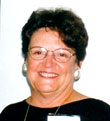
Louis M. Brown Conflict Prevention Award by the Center for Civic Mediation
On Tuesday, April 17, 2012, Professors Floralynn Einesman and Linda Morton of California Western School of Law received the Louis M. Brown Conflict Prevention Award by the Center for Civic Mediation at its 19th Annual Awards Dinner in Los Angeles. Harold A. Brown, a name partner at the leading Beverly Hills entertainment law firm, Gang, Tyre, Ramer & Brown, Inc., is a longtime supporter of the Center for Creative Problem Solving, the Louis M. Brown Program in Preventive Law, and California Western School of Law. Mr. Brown’s introduction of Professors Floralynn Einesman and Linda Morton was, in part, the following:
More information here
| ...................................................................... |
Center for Creative Problem Solving wins U.S. Patent and Trademark Office Grant
During 2011 and 2012, the Center for Creative Problem Solving is pleased to be working on a grant from the United States Patent and Trademark Office.
The grant is for a study of the settlement of Intellectual Property rights disputes. In mid-January, 2012 representatives from ten countries that have developed specialty courts for IP disputes will meet at the USPTO in Washington, D.C. to compare their innovations. Professors James Cooper and Thomas D. Barton will offer an overview of how globalization and digitalization influence the need for, and the shape of, ADR methods to address IP problems. Then, in March a Symposium will be convened at California Western School of Law devoted explicitly to considering new methods for preventing and resolving IP issues.
click here for more information
| ...................................................................... |
Center for Creative Problem Solving
The mission of California Western School of Law is to educate creative problem solvers. This is an inherently interdisciplinary effort that envisions a more imaginative, more helpful lawyer who can prevent some problems from arising, and often solve more peaceably and constructively those problems that cannot be avoided. Creative problem solving stresses flexibility of mind, active listening, the ability to frame problems in multiple ways, and choosing the best ways, among a broad range of skills and decisional procedures, of addressing any particular problem.
Not all problems are alike. Some problems are best resolved through conciliation. Others may require litigation. When is a client’s problem appropriate for mediation? What gives a complex problem the potential to be resolved through a facilitated negotiation? How should a lawyer discuss the alternatives with the client? How can a lawyer be more proactive in helping a client prevent problems? These are some of the questions the Center for Creative Problem Solving is seeking to answer.
|
|
Problem Solving in an Era of Judicial Reform: The Work in Latin America
Drug Treatment Courts Initiative
Drug treatment courts, the alternative sentencing regime for lower drug possession crimes that focuses on rehabilitation rather than in incarceration, has been a successfull U.S. judiccial innovation focusing on the demand side of the War on Drugs.
Focus on Indigenous Justice Systems: La Ley Comunitaria
By combining respect for their ancient cultures, languages and traditions with the integration of current judicial reform, we shall continue to empower indigenous peoples while still protecting due process and other fundamental rights.
Click here for more information about our work in Latin America.
|